

Remeron for anxiety
Yes, Remeron (generic name: mirtazapine) is sometimes given for anxiety, but it is frequently used “off-label” and is not officially licensed for anxiety disorders in many countries. Remeron for anxiety
When someone has anxiety together with symptoms like these, it might be taken into consideration.
- Inability to fall asleep or insomnia
- Loss of appetite or weight
- Anxiety and depression coexisting
- Adverse effects or insufficient reaction to other antidepressants
Antidepressant is mirtazapine. There is still much to learn about how this drug functions. It is believed to improve central nervous system nerve cell communication and/or reestablish chemical equilibrium in the brain.
Adults with major depressive illness are treated with mirtazapine.
The safety and efficacy of using mirtazapine to treat MDD in children is unknown.
Warnings
Tryptophan (also known as L-tryptophan) should not be used with mirtazapine.
If you have used an MAO inhibitor within the last 14 days, such as isocarboxazid, linezolid, methylene blue injection, phenelzine, tranylcypromine, and others, avoid using mirtazapine.
When taking antidepressants for the first time, some people experience suicidal thoughts. While taking mirtazapine, your doctor must monitor your progress at routine check-ups. Changes in your mood or symptoms should also be noticed by your family or other caretakers. Remeron for sleep
Without a doctor’s advice, do not administer this medication to anyone under the age of eighteen. Children are not permitted to use this medication.
Your symptoms might not get better for several weeks. If, after four weeks of treatment, your symptoms do not improve, continue taking the medication as prescribed and let your doctor know. Remeron for anxiety
Alcohol use may exacerbate some mirtazapine adverse effects.
Mirtazapine may cause cognitive or behavioral problems. If you drive or engage in any activity that calls for alertness, exercise caution.
Don’t stop taking this medication suddenly. Consult your physician before discontinuing this medication.
Dosing information
Each patient will receive a different dosage of this medication. Observe the label’s instructions or your doctor’s instructions. Only the typical dosages of this medication are included in the information that follows. If your dose is different, don’t adjust it unless your doctor instructs you to.
The strength of the medication determines how much of it you take. Additionally, the length of time you take the medication, the number of dosages you take daily, and the interval between doses all depend on the medical condition for which you are taking it. Remeron for sleep
- For oral dosage forms (orally disintegrating tablets, tablets):
For depression:
- Adults: Initially, take 15 mg once daily, ideally in the evening right before bed. If necessary, your doctor may change your dosage. However, the daily intake is often limited to 45 mg.
- Children: Your doctor must decide on the use and dosage. Remeron for anxiety
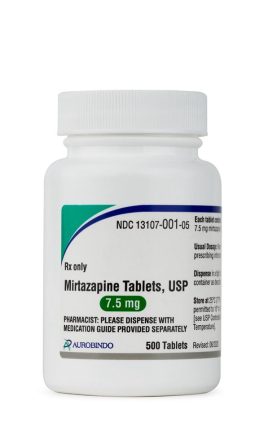
How should I take mirtazapine?
Follow your doctor’s instructions when using mirtazapine. Read any drug guidelines and instruction sheets, and adhere to all instructions on your prescription label. Occasionally, your doctor could adjust your dosage.
Take the medication at the same time every day, usually before going to bed.
Take mirtazapine in usual tablet form with water.
Mirtazapine can be taken with or without food.
When you are ready to consume an oral disintegrating tablet, remove it from its packaging. Without chewing, place the tablet on your tongue and let it dissolve. As the tablet melts, swallow many times.
Your symptoms might not get better for a few weeks. If, after four weeks of treatment, your symptoms do not improve, continue taking the medication as prescribed and let your doctor know.
If you abruptly stop taking mirtazapine, you may experience unpleasant side effects (such as dizziness, vomiting, agitation, sweating, confusion, numbness, tingling, or electric shock experiences). Find out from your doctor how to discontinue using this medication safely.
Keep out of direct sunlight, heat, and moisture and store at room temperature.
Mirtazapine side effects
If you have symptoms of a severe skin response (fever, sore throat, burning eyes, skin pain, red or purple skin rash with blistering and peeling) or an allergic reaction to mirtazapine (hives, joint pain, fever, difficulty breathing, swelling in your face or throat), get emergency medical attention.
Tell your doctor about any new or worsening symptoms, such as changes in mood or behavior, anxiety, panic attacks, difficulty sleeping, or feelings of impulsivity, irritability, agitation, hostility, aggression, restlessness, hyperactivity (either physically or mentally), increased depression, or suicidal or self-harming thoughts.
Call your doctor at once if you have:
- racing thoughts, decreased need for sleep, unusual risk-taking behavior, feelings of extreme happiness or sadness, being more talkative than usual;
- blurred vision, tunnel vision, eye pain or swelling, or seeing halos around lights;
- a light-headed feeling, like you might pass out;
- severe rash, blisters, or swelling on the palms of your hands or the soles of your feet;
- a seizure;
- low white blood cell counts – fever, chills, sore throat, cough, sores in your mouth or nose, flu-like symptoms, trouble breathing; or
- low sodium level – headache, confusion, slurred speech, severe weakness, vomiting, loss of coordination, feeling unsteady.
If you experience any of the symptoms of serotonin syndrome—such as agitation, hallucinations, fever, sweating, shivering, rapid heartbeat, muscle stiffness, twitching, lack of coordination, nausea, vomiting, or diarrhea—get medical help immediately away.
Common mirtazapine side effects include:
- drowsiness, dizziness;
- increased appetite; or
- weight gain.
There may be other adverse effects; this is not an exhaustive list. For medical advice on side effects, give your doctor a call. You can call the FDA at 1-800-FDA-1088 to report negative effects. Remeron for anxiety
What other drugs will affect mirtazapine?
This impact might be exacerbated by taking mirtazapine with other medications that cause drowsiness. Consult your doctor before taking opioids, sleeping pills, muscle relaxants, or medications for anxiety or seizures. Tell your doctor about all the medications you already use. Many medications can affect mirtazapine, particularly:
- cimetidine;
- diazepam;
- St. John’s wort;
- tramadol;
- tryptophan (sometimes called L-tryptophan);
- an antibiotic – clarithromycin, rifampin, rifampicin, telithromycin;
- antifungal medicine – itraconazole, ketoconazole;
- antiviral medicine to treat HIV/AIDS – indinavir, nelfinavir, ritonavir, saquinavir;
- medicine to treat mood disorders, thought disorders, or mental illness – such as lithium, other antidepressants, or antipsychotics;
- migraine headache medicine – sumatriptan, rizatriptan, Imitrex, Maxalt, and others; or
- seizure medicine – carbamazepine, phenytoin.
Mirtazapine may interact with numerous other medications, and this list is not exhaustive. This covers vitamins, herbal goods, and both prescription and over-the-counter medications. This list does not include every potential drug interaction.
Before taking this medicine
If you have a mirtazapine allergy, you shouldn’t take this medication.
If you have taken an MAO inhibitor within the last 14 days, avoid using mirtazapine. There could be a hazardous medication interaction. Isocarboxazid, linezolid, methylene blue injection, phenelzine, tranylcypromine, and other medications are examples of MAO inhibitors.
Inform your doctor if you have ever experienced any of the following to ensure that this medication is safe for you:
- low white blood cell counts;
- glaucoma;
- liver or kidney disease;
- low sodium levels in your blood;
- a seizure;
- depression, suicidal thoughts or actions;
- bipolar disorder (manic depression) in you or a family member;
- heart problems or stroke;
- high cholesterol or triglycerides;
- long QT syndrome (in you or a family member); or
- low blood pressure.
Make sure your doctor is aware of any additional medications you use, such as stimulants, opioids, herbal items, or medications for depression, mental illness, Parkinson’s disease, migraine headaches, severe infections, or nausea and vomiting prevention. These medications may interact with mirtazapine and result in serotonin syndrome, a dangerous illness.
When taking antidepressants for the first time, some young people experience suicidal thoughts. At routine checkups, your doctor should assess your progress. Changes in your mood or symptoms should also be noticed by your family or other caretakers.
If you are nursing or pregnant, let your doctor know.
If you have phenylketonuria (PKU), the oral disintegrating tablet may be dangerous since it contains phenylalanine.
Anyone under the age of eighteen is not permitted to use mirtazapine.
Warnings about mirtazapine during pregnancy and lactation (more details)

admin
all author postsRelated posts
Elementor #3140
- Posted on
- 0
Elementor #3119
- Posted on
- 0
Elementor #3109
- Posted on
- 0
Elementor #3101
- Posted on
- 0